Bedding · Sleep Education
Choosing a Mattress Pad by Fill: Cotton, Wool, Silk, and Down Alternative
A mattress pad is a modest layer with an outsized influence on how a bed feels. Its fill can change the surface’s softness, warmth, and handling of moisture, while its construction determines whether it is easy to wash, difficult to dry, or best left to occasional care. The right choice is less a matter of ranking materials than matching one to your sleep habits, climate, mattress, and tolerance for laundry.
What a mattress pad can—and cannot—do
A mattress pad sits between the mattress and the fitted sheet. Depending on its design, it may add a small amount of cushioning, protect the mattress from everyday wear, or help adjust the feel of the sleep surface. Some pads are thin and close-fitting; others have a lofty, quilted construction that makes the bed feel softer and warmer. Their names are not always used consistently, so it helps to inspect the actual thickness, fill, fabric, and care instructions rather than rely on the label alone.
The word “pad” can suggest a solution to almost any mattress complaint. Its influence is more limited. A thin cotton pad may make a surface feel a little more forgiving, but it will not transform a very firm mattress into a plush one. A cushioned pad can soften the initial impression of a bed, yet it is not a substitute for a topper when substantial pressure relief or a meaningful change in firmness is needed. Nor can a pad correct a mattress that is sagging or no longer supportive.
Think of a mattress pad as a finishing layer: useful for small adjustments and surface protection, but not a structural repair. With that distinction in mind, the choice of fill becomes easier. Cotton, wool, silk, and down alternative each offer a particular balance of cushioning, breathability, warmth, and care.
Cotton: familiar, breathable, and relatively straightforward
Cotton is one of the most familiar bedding materials, and its appeal is partly its lack of drama. Depending on the amount of fill and the way it is quilted, a cotton mattress pad can add a gentle cushion without making the bed feel dramatically different. Cotton is generally breathable, softens with use, and is often available in machine-washable constructions. For people who want a simple, natural-feeling layer, those qualities can be more persuasive than a promise of dramatic plushness.
In a cotton pad, the cover and the fill both matter. A cotton-blend cover may feel different from a 100 percent cotton one, while the fill’s thickness and quilting determine how evenly it sits across the mattress. Stitching helps keep material from migrating, but quilting patterns can also affect the hand of the surface: a close, shallow pattern may feel flatter, while a more substantial construction can create a little more loft.
Cotton is often a sensible consideration for people who sleep warm, but no fiber guarantees a cool night. Heat retention depends on the whole bed: the mattress, sheet fabric, blankets, room temperature, humidity, and the sleeper. A thick pad covered by dense bedding may feel warm even if its cotton components breathe well. Conversely, a thin cotton layer under light sheets may have very little effect on temperature.
Care is one of cotton’s practical advantages, provided the manufacturer’s instructions allow machine washing. A pad that fits the home washing machine and dryer can be easier to refresh than one requiring hand washing or professional cleaning. Check the label before buying, though. Large mattress pads may exceed a household machine’s capacity, and repeated high-heat drying can affect some fabrics or elastic components.
A cotton mattress pad may suit sleepers looking for familiar softness, moderate cushioning, and relatively uncomplicated upkeep. It is less likely to satisfy someone seeking a thick, cloudlike layer. “Cotton” describes a material, not a guaranteed level of comfort; construction is the part that gives the material its character.
Wool: moisture management and a more substantial natural feel
Wool has an unusual place in bedding: it can feel cozy without behaving exactly like a dense blanket. Its fibers can absorb moisture vapor, and wool-filled pads are often chosen by people who want a natural material with a cushioned, temperature-moderating feel. How warm a particular pad seems still depends on its fill weight, weave, quilting, and the rest of the bedding. Wool is not a cooling device, but some sleepers appreciate how it handles moisture and warmth across changing conditions.
A wool pad may feel more resilient or textured than a thin cotton one. Some designs are densely woven and relatively flat; others have enough batting to create a noticeable cushion. This means the word “wool” alone does not tell you whether a pad will feel lofty. Look for information about the amount of fill, the cover, and how the material is held in place. If you prefer a very smooth, low-profile surface, a thick wool layer may feel too substantial. If you like a little more body under the sheet, it may be appealing.
Wool’s care requirements deserve close attention. Some wool pads are hand-washable and line-dried, while others require dry cleaning or have different restrictions. Washing wool incorrectly can lead to shrinkage, distortion, or changes in texture. Before choosing a wool mattress pad, consider whether its care routine suits your household—not merely whether the material sounds appealing in the abstract.
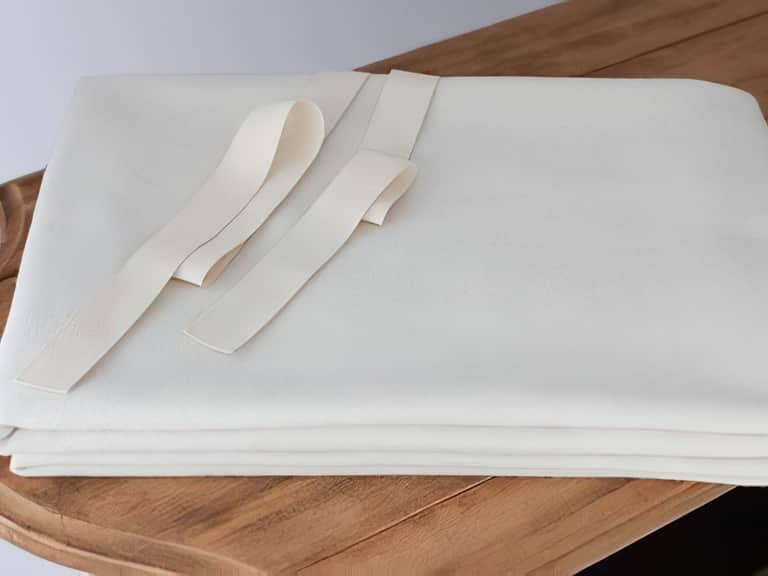
For example, the Savvy Rest Wool Mattress Pad is described as a natural wool pad with a densely woven construction and removable cotton corner ties. Its care instructions call for hand washing in mild detergent and line drying. Those details make it a useful illustration of the trade-off: an appealing natural fiber and a snug fit, paired with more involved maintenance than many machine-washable pads.
Wool can be worth considering when moisture handling, natural materials, and a soft but not necessarily downy feel are priorities. It is not an ideal match for everyone, especially those who want a pad they can routinely toss into a standard wash cycle. As with any bedding, the practical routine is part of the product’s comfort.
Silk: light cushioning and careful upkeep
Silk-filled mattress pads tend to be associated with a light, smooth layer rather than deep loft. They may appeal to people who want a refined surface and gentle cushioning without the fuller feel of a thick quilted pad. Their covers and construction vary, so the actual hand against the sheet depends on the materials used on top as well as the fill within.
Temperature claims about silk should be understood in context. A lightweight silk-filled pad may avoid the heavy, padded feel some sleepers dislike, and silk is often valued for its smoothness. But bedding temperature is a system, not a single fiber’s achievement. The mattress, protector, fitted sheet, duvet, room climate, and personal comfort all contribute. A silk pad cannot promise that every sleeper will feel cool, nor can it compensate for a warm room or insulating layers elsewhere in the bed.
Care is often the decisive question. Many silk mattress pads require dry cleaning or similarly cautious treatment rather than routine machine washing. That may be perfectly manageable for a pad used beneath a washable protector, but less convenient for households seeking a simple weekly or monthly laundry routine. Read the care label before committing, and consider the cost and availability of the recommended cleaning method.
Silk may suit someone who values a light, delicate layer and is comfortable with more careful maintenance. It is less suited to someone whose first requirement is easy washing, or who wants a substantial change to mattress firmness. The appeal is subtle: less a dramatic cushion than a considered addition to the surface.
Down alternative: plushness with familiar care options
Down-alternative fill is typically made from synthetic fibers designed to provide some of the loft and softness associated with down, without using down as the filling. The phrase covers a range of materials and constructions, so the feel can run from lightly cushioned to notably puffy. If softness and extra loft are the main goals, a down-alternative pad may be more immediately noticeable than a flatter cotton or silk option.
Many down-alternative pads are designed to be machine washable, though this is not universal. Even when washing is permitted, the pad’s size can make the process awkward. It must have room to move in the machine, and thick fill may take longer to dry than a thin layer. Incomplete drying can leave a bulky pad uncomfortable to use, so follow instructions carefully and make sure the entire item is dry before putting it back on the bed.
Synthetic fill may feel warm, especially when a pad is thick or paired with insulating sheets and blankets. Some products use breathable covers or lighter fill to reduce that effect, but “down alternative” does not automatically mean cool or moisture-wicking. If you sleep hot, focus on construction, fill thickness, and the fabric next to your body rather than the category name alone.
Down alternative can be a practical choice for sleepers who want a plush feel and prefer a widely familiar, potentially machine-washable material. It may be less suitable for someone who wants a nearly weightless layer or is especially sensitive to warmth. A sample of the fabric or a close inspection of the return and care policies, where available, can help set expectations before purchase.
A comparison by everyday priorities
It is helpful to compare fills not as contestants in a universal race, but as different answers to a handful of ordinary questions. How much change should the pad make? How do you sleep temperature-wise? How much care are you willing to undertake? The answers narrow the field more reliably than a broad claim that one material is “best.”
- For a familiar, moderate layer: Cotton often offers softness and a relatively straightforward feel, with care depending on the specific construction.
- For natural fill and moisture handling: Wool may be attractive, particularly when its more involved washing instructions are acceptable.
- For a light, refined surface: Silk may suit those who want gentle cushioning and are comfortable with careful or professional cleaning.
- For more loft and plushness: Down alternative often provides a fuller feel, though warmth and drying time deserve consideration.
- For the easiest care: Compare the actual labels rather than assuming a material dictates washability. Construction and manufacturer instructions vary.
These are tendencies, not guarantees. A thin wool pad may feel less plush than a thick cotton one; a down-alternative pad may be flatter than its name suggests. The product’s fill amount, quilting, cover, and fit can matter as much as the fiber itself.
Measure the mattress before choosing
Mattress depth is an unglamorous detail that can determine whether a pad stays in place. Measure from the bottom edge to the top of the mattress, including any existing topper or permanent layer you intend to keep beneath the pad. Then check the pad’s pocket depth or attachment method. A fitted skirt that is too shallow may pull loose at the corners; one with extra depth may fit a thicker mattress more securely.
Not every pad uses a deep fitted skirt. Some rely on elastic corner straps or ties, which can accommodate a range of profiles but may shift more easily depending on the sleeper’s movement and the mattress surface. If you use an adjustable bed, confirm that the pad can move with the mattress without bunching or pulling at the corners. Also consider whether a waterproof protector, if you use one, belongs above or below the comfort layer according to its design and care instructions.
Allow for the combined height of everything on the bed. A new pad can make fitted sheets feel tight, particularly when a topper is already in place. The result may be a sheet that rides up during the night or strains at the seams. A quick measurement before shopping is less romantic than imagining a perfect sleep surface, but more likely to preserve it.
Distinguish a pad from a topper and a protector
These three layers are sometimes confused because they occupy similar territory on the bed, but they serve different purposes. A mattress protector is primarily intended to shield the mattress from spills, perspiration, dust, and everyday contamination; some are waterproof, while others focus on a simpler barrier. A mattress pad typically adds a modest amount of comfort and surface protection. A topper is generally thicker and intended to change the feel of the mattress more noticeably.
There is overlap. A padded protector may add a small cushion, and a thin topper may offer only a subtle adjustment. The distinction is most useful when setting expectations. If your goal is to protect an expensive mattress, prioritize coverage, fit, and cleaning. If you want a gentle softening, a pad may be enough. If you are seeking a marked change in pressure relief or firmness, examine topper options rather than expecting a thin pad to perform beyond its design.
Layering can also affect temperature. A protector, pad, fitted sheet, and topper all contribute to the bed’s overall feel. More layers do not necessarily mean more comfort: they can introduce warmth, reduce the sense of responsiveness, or make the bed difficult to keep neatly fitted. A considered, minimal combination often works better than adding layers by trial and error.
How to choose according to your sleep preferences
Start with the complaint you hope to solve. If the mattress is simply a little too firm at the surface, a modestly cushioned pad may soften first contact. If the bed feels hot, a lighter construction and breathable sheet combination may be more useful than choosing a fiber based on cooling language alone. If your main concern is laundering, care instructions should outrank an appealing description of the fill.
Side sleepers sometimes prefer a softer-feeling surface around the shoulders and hips, but a pad should not be expected to supply substantial pressure relief unless it has enough depth and cushioning to do so. Back and stomach sleepers may favor a lower-profile layer that does not create an overly yielding surface. These are starting points rather than rules: body shape, mattress firmness, and personal comfort vary widely.
People who share a bed may have different temperature preferences. A thick, warm pad chosen for one sleeper can be uncomfortable for the other. In that situation, a thinner layer may be a reasonable compromise, while separate blankets or other bedding adjustments can address individual warmth more directly. The mattress pad need not solve every difference between two sleepers.
For allergies or sensitivities, look beyond the broad material category. Check the cover, fill, treatments, and cleaning guidance, and consult a qualified health professional for medical concerns. Labels such as “natural” or “hypoallergenic” do not replace an assessment of the specific materials and an individual’s response to them.
Care is part of the buying decision
A mattress pad is an item that spends its life beneath sheets, out of sight, which can make care instructions easy to overlook. But a pad that cannot be washed at home may change how you maintain the bed. Before choosing, note whether it can be machine washed, whether it requires a large-capacity machine, whether it must be line dried, and whether professional cleaning is recommended.
Use a mild detergent and temperature settings only when the label permits them. Avoid assuming that a natural fiber should be hand washed or that a synthetic fill can withstand high heat. Elastic skirts and quilted construction may have their own limits. If the pad is not washable, a washable mattress protector above it can help reduce how often the pad needs cleaning, provided the layers remain comfortable and fit correctly.
Let a washed pad dry completely before returning it to the bed. This is especially important for bulky fill, which may feel dry on the surface while retaining moisture inside. Periodically check for shifting fill, stretched corners, or quilting that has loosened. These small signs can indicate that the layer is no longer lying evenly or holding its shape as intended.
A practical decision checklist
Before settling on a cotton mattress pad, wool mattress pad, silk mattress pad, or down-alternative mattress pad, take a moment to answer a few concrete questions:
- What change do I want? A little softness, a plush surface, protection, or a more substantial shift in feel?
- How warm do I sleep? Consider the entire bedding combination, not just the fill’s name.
- How deep is my mattress? Include existing layers and check pocket depth or attachment style.
- How will I clean it? Confirm washing, drying, and professional-care requirements before buying.
- Will it work with my sheets? Account for added height and the fitted sheet’s pocket depth.
- Do I need a pad or a topper? A pad is a modest adjustment; a topper is usually intended to make a more substantial comfort change.
There is no universally superior fill. Cotton offers a familiar, often uncomplicated option; wool brings a distinct natural feel and moisture-handling qualities; silk favors a lighter touch and careful care; down alternative can add loft and softness. The most suitable pad is the one whose feel, fit, and maintenance requirements make sense in the actual bedroom—not merely in a product description.
Frequently asked questions
Does a mattress pad make a bed softer?
It can soften the surface slightly, especially if it has a quilted or lofty fill. The effect is usually modest. If you want a substantial change in pressure relief or firmness, a topper may be more appropriate.
Which mattress pad fill sleeps coolest?
No fill can guarantee a cool night. Thin, breathable construction may feel less warm than a thick, insulated pad, but sheets, mattress materials, blankets, humidity, and room temperature all influence comfort. Compare the complete construction rather than relying on a single material name.
Is a cotton mattress pad easy to wash?
Some cotton pads are machine washable, but care varies by product. Check the label, and consider the pad’s size and drying requirements. A large or heavily quilted pad may be difficult to wash and dry in a standard household machine.
Can I put a mattress protector over a pad?
Often, yes, but the order depends on the design and purpose of each layer. Check both products’ instructions, then confirm that the combined height still works with your fitted sheet and that the layers do not bunch or restrict movement.
Will a mattress pad protect against spills?
Only if it is designed to provide that kind of barrier. Many comfort-focused pads are not waterproof. For liquid protection, look for a protector explicitly described as waterproof and follow its care instructions.